
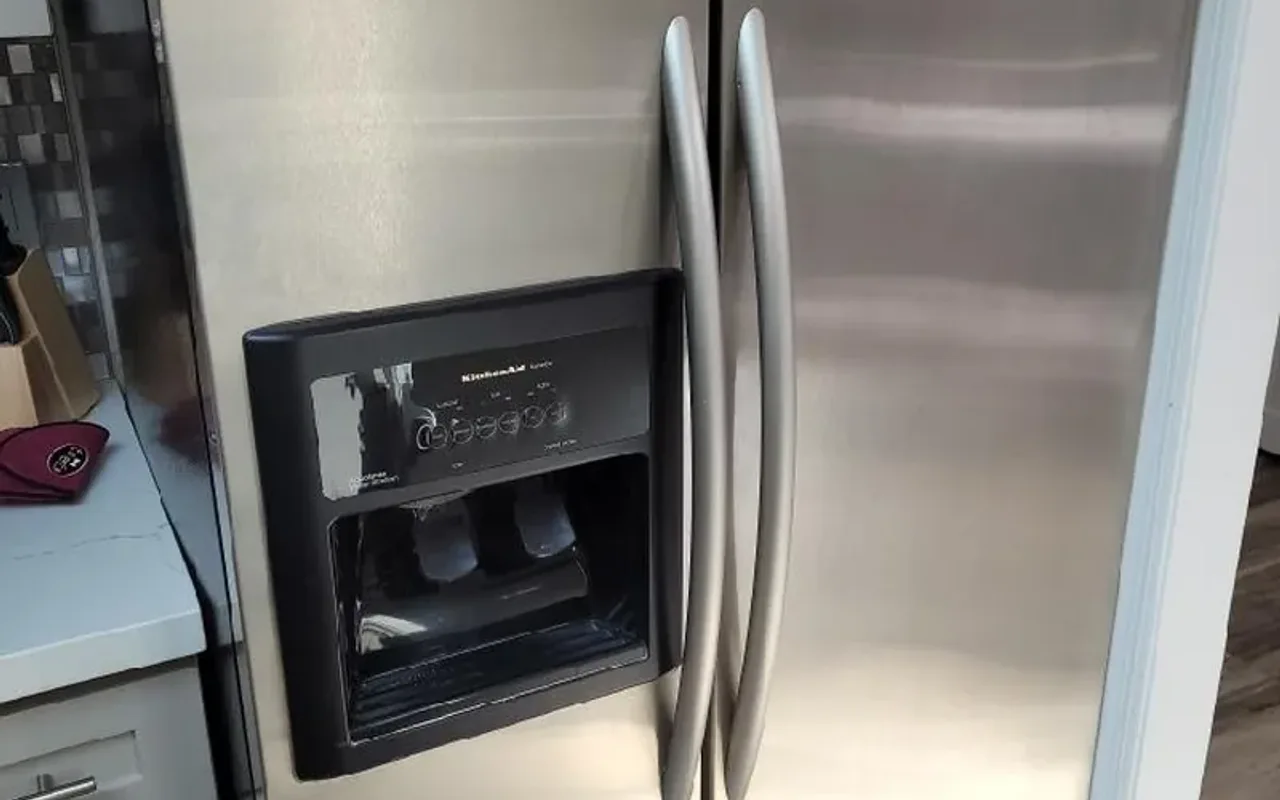
Common refrigerator repair enquiries
- Fridge warm, freezer still cold
- Water collecting underneath
- Ice maker stopped making ice
- Clicking, frost or temperature alarms
A warm refrigerator needs a careful assessment
A refrigerator that is not cooling can have an airflow, control, door-seal or refrigeration problem. Note whether both compartments are affected and whether the temperature changed suddenly. Keep the doors closed as much as possible and follow food-safety guidance for food that may have warmed. A temperature display alone cannot identify a failed compressor or prove that refrigerant is low.
Ice makers, leaks and uneven temperatures
Tell the provider where the water first appears: under the cabinet, inside a drawer, around the dispenser or beside the supply connection. Mention recent filter changes, a door left ajar or an ice maker that fills but does not eject. Different models use different fill, harvest and defrost sequences; the model number helps the provider choose the correct service information.
Built-in and freestanding refrigerator service
Share the brand, model and installation type before arranging a visit. Panel-ready doors, anti-tip restraints and water connections can affect access. Do not pull a heavy built-in out of its enclosure or open refrigerant lines. Ask whether the provider services the specific model, what diagnosis includes and how any proposed repair will be checked.
What to confirm before the visit
Ask who will attend, whether the provider supports the exact model and what the diagnostic charge includes. Confirm parts, labor, access work, any fee credit and warranty terms in the written proposal. An appointment does not guarantee a stocked part or a same-day completed repair. Keep the model information and agreed scope available for the visit.
Local appliance repair enquiries
Start with New Braunfels, San Antonio, San Marcos, Seguin or the full service-area directory. Confirm coverage for your address.